
New Book from The Safety Firm
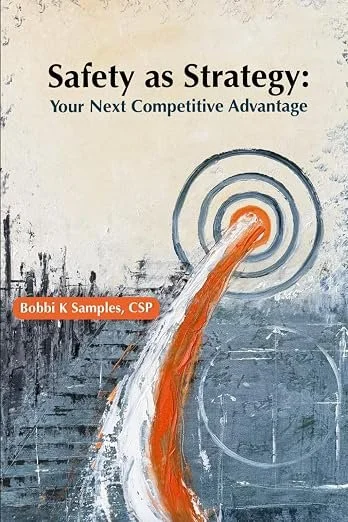
Safety as Strategy
Your Next Competitive Advantage
Get the Book on Amazon
Most companies think they have a safety problem.
What they actually have is a leadership problem.
The gap between those two diagnoses is enormous — because the solutions are completely different.
The Big Idea
Safety Is a Performance System
Safety is not simply about preventing injuries. Safety is not just about compliance. When leaders are trained to lead, when systems are designed to support consistency, and when expectations are clearly communicated and measured, organizations become more reliable.
Reliability reduces downtime. Reduced downtime improves productivity. Improved productivity strengthens profitability. Safety, managed strategically, becomes a competitive advantage.
The Logic
Follow the Chain
Who It's For
Written for the People Who Can Actually Change Things
This book is not written exclusively for safety professionals. It's written for the leaders who have the authority to change the culture — and haven't yet fully understood that it's their responsibility to do so.
CEOs & C-Suite Executives
COOs & Operations Leaders
Plant & Facility Managers
HR & People Leaders
Safety Professionals
Anyone Who Sets the Culture

Free Self-Assessment
The Safety Strategy Scorecard
Is your safety program a cost center — or a competitive advantage? Answer all 10 questions and your score updates live. 1 = Never | 2 = Rarely | 3 = Sometimes | 4 = Usually | 5 = Always
Senior leaders visibly participate in safety activities — not just sign off on reports.
Safety is discussed in business planning meetings alongside budget, production, and staffing.
When production pressure and safety conflict, safety wins.
Supervisors are trained and supported to lead safety conversations — not just enforce rules.
Safety performance is consistent across shifts and departments, regardless of who is supervising.
Employees report near-misses and hazards without fear of discipline or retaliation.
Front-line workers are actively involved in identifying risks and improving safety processes.
Your organization tracks leading indicators (near-miss rates, observation frequency, training completion) — not just lagging ones (injury rates, OSHA recordables).
Safety goals are specific, measurable, and reviewed regularly — not just stated annually.
Safety is integrated into onboarding, performance reviews, and operational decisions — not treated as a separate department or compliance function.
0 of 10 answered
Your Score
Answer the questions to see your results here.
"Your safety score isn't a judgment. It's a starting point. Every organization I've worked with that transformed their program started by being honest about where they were."
— Bobbi K. Samples, CSPReady to Make Safety Your Strategy?
Available now in paperback on Amazon. 159 pages. No fluff.
Get the Book → Talk to Bobbi FirstThe link above is an affiliate link. If you purchase through it, a small commission may be earned at no additional cost to you.